
Program
St Nicholas is proud to be an Indiana Paths of Quality Level Three program. “Level 3 Programs have demonstrated the knowledge and skill necessary for planning appropriate activities and opportunities that lead children toward school readiness. Level 3 programs have made a significant investment in staff professional development, and they incorporate family and staff input into the program. “

he quality of our childcare program is evaluated according to the National Association for the Education of Young Children guidelines, the Indiana Paths to Quality program, and Child Care Development Fund (CCDF) regulations. Our quality program meets low child-to-adult ratios, minimum space requirements, trained staff, curriculum guides for every age, safe infant sleep practices, family education and involvement, and a healthy food program. As stated in these documents, a high-quality childcare program provides an environment where infants and toddlers are safe, well supervised, nurtured, nourished, and stimulated through language, sights, sounds, and engaging learning experiences. This can result in healthy, happy children prepared for academic success and productive lives
The St. Nicholas Board of Directors is committed to ensuring that at least 50% of staff have a Child Development Certificate or higher education degree and that staff and volunteers receive ongoing training to ensure best childcare practices are in place.
Infants
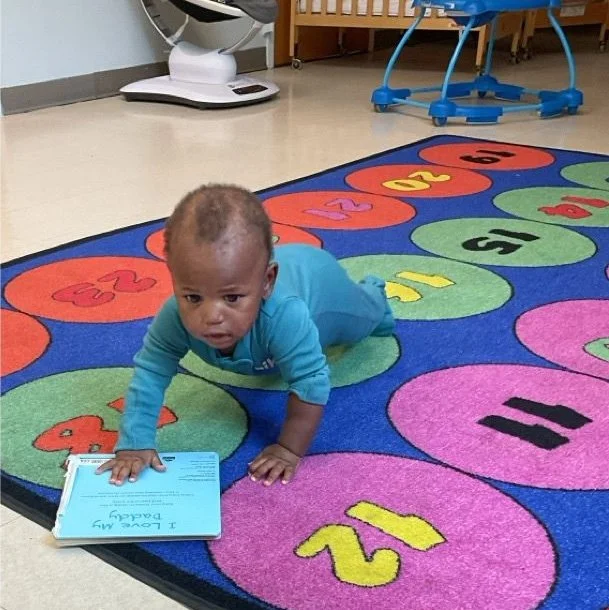
Respectful and responsive caregiving is what happens throughout the day.
Although we are spending most of our time feeding, changing, and helping get to sleep, with each caregiving task we engage and interact and talk with each infant, and we follow their individual schedules. Whenever possible, we read to them, stack blocks (again, and again, and again), and we work on infant sign language. We are building relationships based on trust, which encourages the infants to explore their world more confidently. The infants begin bonding with one another through play, and sometimes their communication with each other can be quite loud.
Toddlers
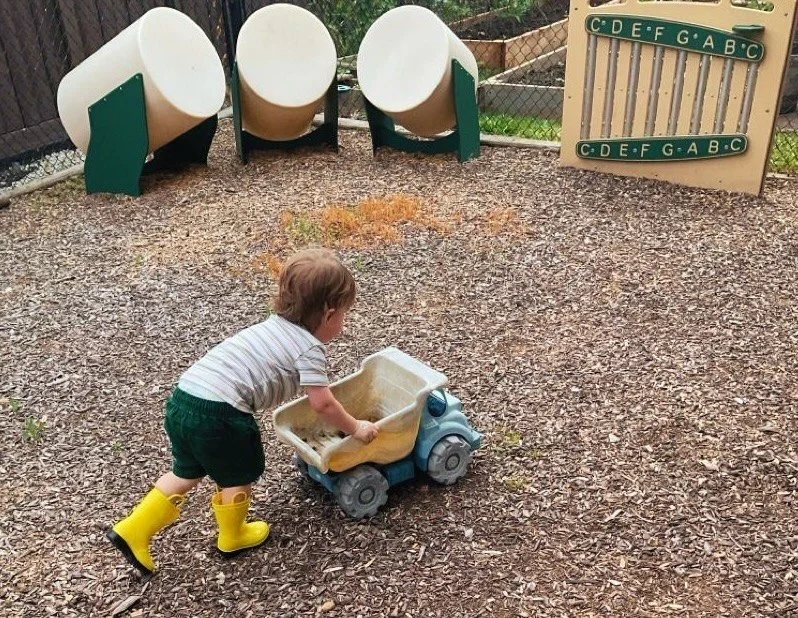
Routine is introduced through a daily schedule with set (but flexible) times for outdoor/gross motor play and classroom activities that the teacher can guide or that children can explore through “free play” or choice time.
Many sensory activities are shared with the toddlers because they are still learning how to use their bodies and their senses. They want to touch, taste, smell, see, and hear as much as possible, so music and movement play a big role in their continuously developing language skills. Vocabulary builds rapidly as toddlers near 24 months, so we talk with them as much as possible.
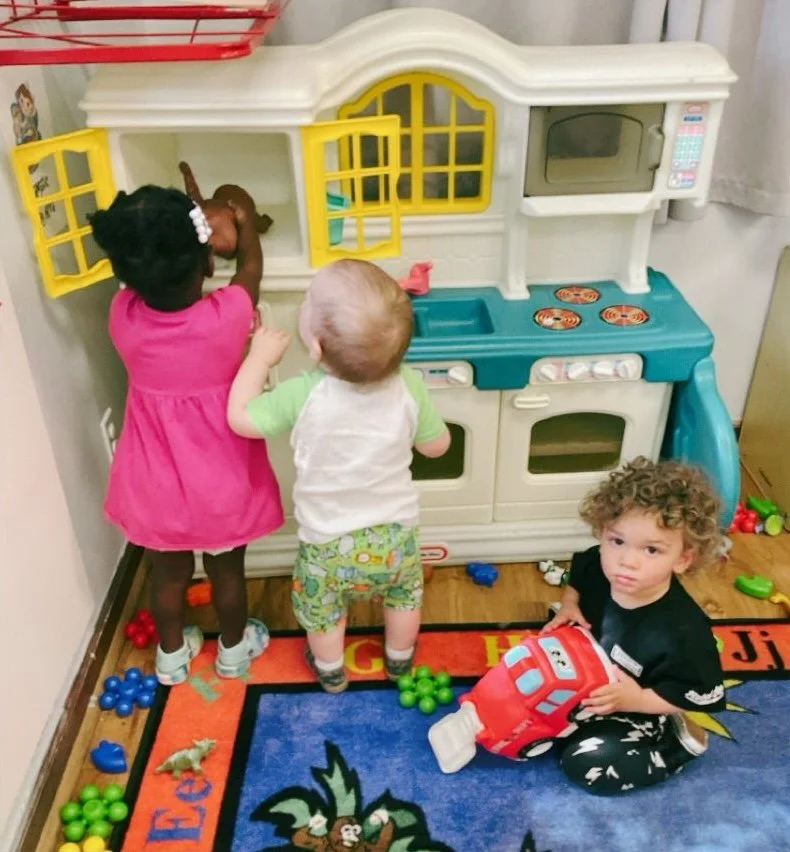
Our toddler program consists of two classrooms: Toddler Ones and Toddler Twos. In our Toddler One classroom, a child must be at least twelve months old and walking, so they still need plenty of opportunities to practice gross motor skills. They also need several hands-on activities and plenty of hugs. They love to explore books, but especially love it when one of the teachers explores with them. In our Toddler Twos classroom, we are introducing teacher-led activities that lead to child-directed experiences as they learn to treat their friends and their environment with respect.
Two-and-a-half to Fours
Literature is the focus in this classroom. Activities are built around themes and stories that are read to the children on a daily basis.
Through books, children are learning numeracy skills, listening skills, how to work in small groups and large groups. This group still needs sensory activities as well – they learn by doing, so the teacher facilitates various learning centers for children to choose from, centers that allow for the practice of dramatic play, science and math skills, building with blocks, fine motor skills, reading and writing. These children want to express themselves more, so art activities are prevalent as well.